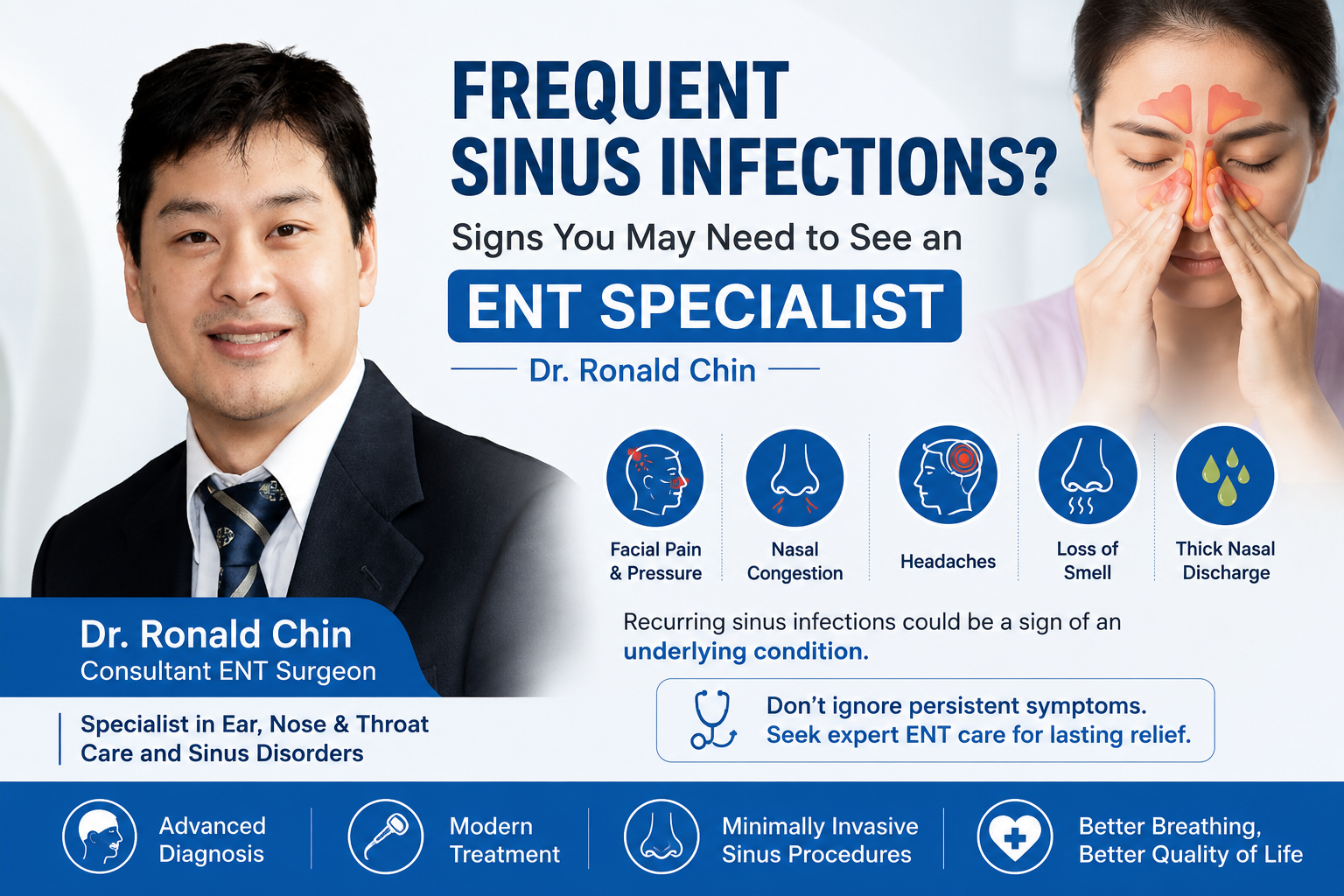
Dr. Ronald Chin – Frequent Sinus Infections? Signs You May Need to See an ENT Specialist
Most people experience a sinus infection at some point in their lives. Often, these infections develop after a common cold and resolve with rest, hydration, and time. However, when sinus symptoms become frequent, persistent, or severe, they may indicate an underlying condition that requires specialized medical attention.
As an ENT (Ear, Nose, and Throat) specialist, I frequently see patients who have struggled with recurring sinus infections for months or even years before seeking professional help. While occasional sinus problems are common, chronic or recurrent sinus infections should not be ignored. Understanding the warning signs and available treatment options can help you find lasting relief and improve your quality of life.
Understanding the Difference Between a Common Cold and Chronic Sinusitis
Many people confuse a common cold with a sinus infection because the symptoms can appear similar in the early stages. A common cold is a viral infection that typically causes a runny nose, nasal congestion, mild headache, sneezing, and sore throat. Most colds improve within seven to ten days without medical treatment.
Sinusitis, on the other hand, occurs when the tissues lining the sinuses become inflamed or infected. The sinuses are air-filled spaces located behind the forehead, cheeks, and eyes. When these spaces become blocked, mucus cannot drain properly, creating an environment where bacteria, viruses, or fungi may grow. Acute sinusitis usually lasts less than four weeks and often develops after a cold. Chronic sinusitis persists for 12 weeks or longer despite treatment and may recur multiple times throughout the year. If your symptoms continue long after a cold has resolved, or if they repeatedly return, it may be time to consult an ENT specialist.
Symptoms That Should Never Be Ignored
While mild sinus discomfort may not seem concerning, certain symptoms can indicate a more significant problem. Persistent or recurring symptoms deserve medical evaluation, especially when they interfere with daily activities.
Facial Pain and Pressure
One of the hallmark signs of sinusitis is facial pain or pressure. Patients often describe discomfort around the cheeks, forehead, eyes, or nose. The pain may worsen when bending forward or lying down. Persistent facial pressure may indicate ongoing inflammation within the sinus cavities that requires professional assessment.
Nasal Congestion
A blocked or stuffy nose is common during a cold, but chronic nasal congestion is not normal. Difficulty breathing through the nose can affect sleep quality, concentration, and overall well-being. If congestion lasts for several weeks or keeps returning despite treatment, an underlying issue such as chronic sinusitis, allergies, or nasal polyps may be responsible.
Headaches
Sinus headaches often occur due to pressure buildup within the inflamed sinus cavities. While not all headaches are sinus-related, recurring headaches accompanied by nasal symptoms should be evaluated. Many patients are surprised to learn that what they believed were chronic migraines were actually linked to untreated sinus disease.
Loss of Smell or Taste
A reduced sense of smell is often overlooked, yet it can be an important sign of chronic sinus inflammation. Since smell contributes significantly to taste perception, many patients also notice changes in their ability to enjoy food. When smell loss persists, it may indicate nasal polyps, chronic inflammation, or other conditions affecting the nasal passages.
Thick Nasal Discharge
Persistent yellow, green, or cloudy nasal discharge may suggest ongoing infection or inflammation. While discharge alone does not always indicate bacterial infection, prolonged symptoms warrant further investigation.
Fatigue and Poor Sleep
Chronic sinus problems often affect sleep quality due to nasal obstruction and difficulty breathing. Over time, poor sleep can contribute to daytime fatigue, reduced productivity, and diminished quality of life.
Why Do Sinus Infections Keep Coming Back?
Recurring sinus infections are often a symptom of an underlying problem rather than simply bad luck. Identifying the root cause is essential for long-term relief.
Allergies
Environmental allergens such as pollen, dust mites, mold, and pet dander can trigger chronic inflammation within the nasal passages. This inflammation blocks normal sinus drainage and increases the risk of recurrent infections. Patients with untreated allergies frequently experience ongoing sinus symptoms throughout the year.
Nasal Polyps
Nasal polyps are soft, non-cancerous growths that develop within the nasal passages or sinuses. They can obstruct airflow and prevent proper mucus drainage, leading to repeated infections and persistent congestion. Many individuals with nasal polyps experience reduced smell, chronic blockage, and recurring sinus issues.
Structural Abnormalities
Certain anatomical issues can make some individuals more prone to sinus infections. A deviated nasal septum, narrow sinus drainage pathways, or enlarged nasal structures can impair normal airflow and drainage. In these cases, medical treatment alone may not fully resolve the problem.
Chronic Inflammation
Some patients develop ongoing inflammation due to immune system responses, environmental irritants, or chronic infections. This persistent inflammation creates a cycle of swelling, blockage, and recurrent symptoms.
Environmental Factors
Exposure to cigarette smoke, air pollution, workplace irritants, and dry indoor environments can worsen sinus health and increase the risk of repeated infections.
How ENT Specialists Diagnose Chronic Sinus Problems
Accurate diagnosis is the foundation of effective treatment. ENT specialists use advanced techniques to identify the exact cause of recurring sinus infections.
Comprehensive Medical Evaluation
The diagnostic process begins with a detailed discussion of symptoms, medical history, allergy history, and previous treatments. Understanding the frequency and duration of symptoms helps guide further investigation.
Nasal Endoscopy
A nasal endoscopy is a minimally invasive procedure that allows the ENT specialist to examine the nasal passages and sinus openings using a thin, flexible camera. This procedure provides valuable information about inflammation, nasal polyps, structural abnormalities, and areas of blockage.
Imaging Studies
In some cases, a CT scan of the sinuses may be recommended. CT imaging provides detailed views of the sinus anatomy and helps identify chronic inflammation, anatomical issues, and areas of obstruction that may not be visible during a routine examination.
Allergy Assessment
For patients with suspected allergic triggers, allergy testing may be beneficial in identifying specific substances contributing to ongoing symptoms.
Treatment Options for Lasting Relief
Treatment depends on the underlying cause of the sinus condition. The goal is not only to treat active symptoms but also to prevent future infections.
Medications
Many patients benefit from medications such as:
- Nasal corticosteroid sprays to reduce inflammation
- Saline nasal rinses to improve mucus clearance
- Antihistamines for allergy management
- Antibiotics when bacterial infection is confirmed
- Oral corticosteroids in selected cases of severe inflammation
Allergy Management
For patients with allergy-related sinus problems, controlling allergic triggers can significantly reduce symptom recurrence. Treatment may include environmental modifications, medications, or allergy immunotherapy.
Minimally Invasive Sinus Procedures
When medical treatments do not provide sufficient relief, minimally invasive procedures may be recommended. Modern sinus procedures are designed to restore normal drainage pathways while minimizing discomfort and recovery time. Techniques such as balloon sinuplasty can open blocked sinus passages without extensive surgery. For patients with nasal polyps or significant structural abnormalities, advanced endoscopic sinus surgery may provide long-term symptom improvement.
Tips for Maintaining Long-Term Sinus Health
Preventing sinus problems often involves simple lifestyle habits that support healthy nasal function. Some practical steps include:
- Staying well hydrated
- Using saline nasal irrigation when recommended
- Managing allergies effectively
- Avoiding cigarette smoke and environmental irritants
- Maintaining good indoor air quality
- Practicing good hand hygiene to reduce infections
- Seeking prompt treatment for persistent nasal symptoms
When Should You See an ENT Specialist?
If you experience multiple sinus infections each year, symptoms lasting longer than expected, chronic congestion, facial pressure, headaches, or loss of smell, it may be time to seek specialized care. Recurring sinus infections are not something you simply have to live with. Modern diagnostic tools and treatment options allow many patients to achieve significant and lasting relief.
As an ENT specialist, my goal is to identify the underlying cause of your symptoms and develop a personalized treatment plan that restores comfortable breathing, improves sinus health, and enhances your overall quality of life. Early evaluation can make all the difference in preventing chronic problems and helping you return to feeling your best.
Follow Dr Ronald Chin for more details!